 BeforeAfter
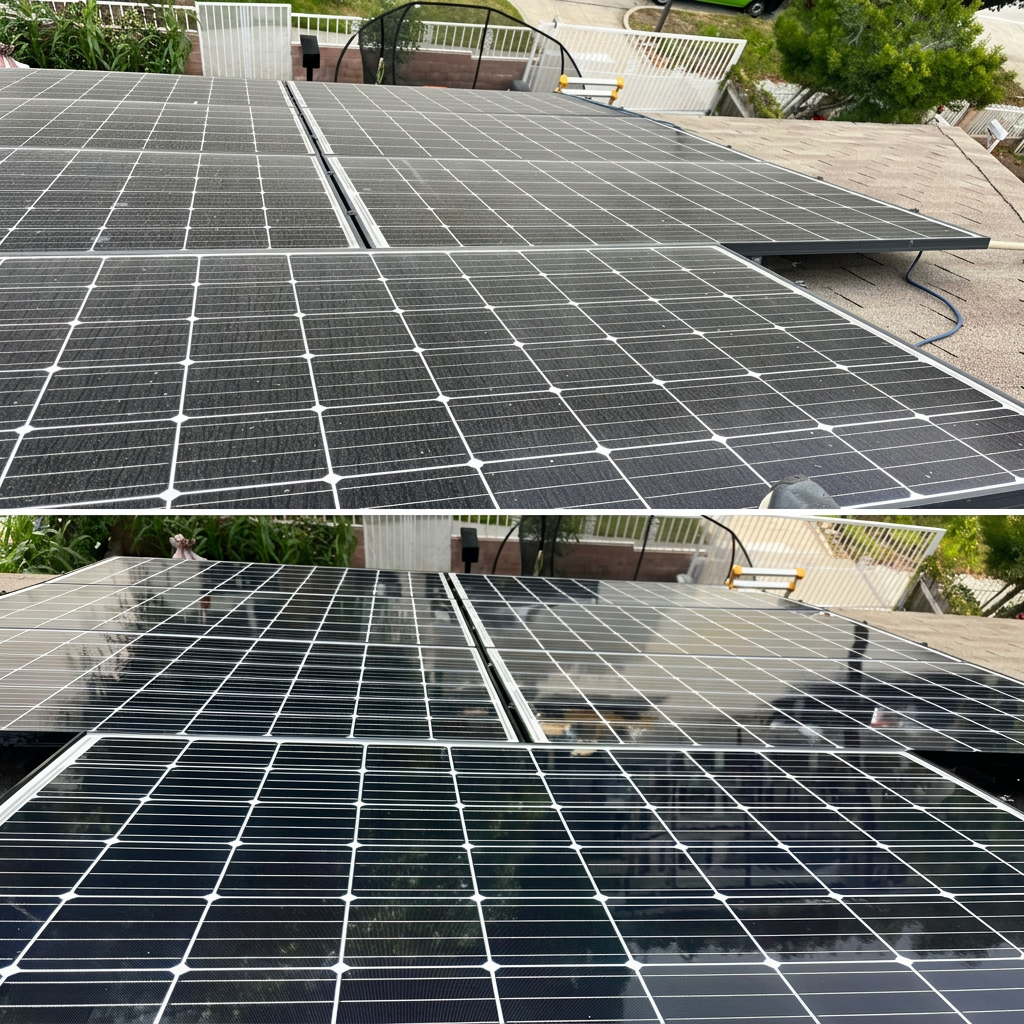
The main array, looking south
The widest section of the roof — months of Arroyo dust and pollen had dulled the panels to a flat, hazy gray. After one pure-water cleaning, the panels read deep black again and the cell grid pops.
These before-and-after photos show one South Pasadena home solar panel system, photographed by our team immediately before and after a professional cleaning. The page is for homeowners deciding whether a solar panel cleaning is worth booking — every image and production screenshot below comes from the same roof, same week, with no filters or staging beyond standard color correction. The goal is to show, honestly, what cleaning solar panels with deionized water and soft brushes actually changes, both visually and in measured kilowatt-hours.
BeforeAfterThe widest section of the roof — months of Arroyo dust and pollen had dulled the panels to a flat, hazy gray. After one pure-water cleaning, the panels read deep black again and the cell grid pops.
 BeforeAfter
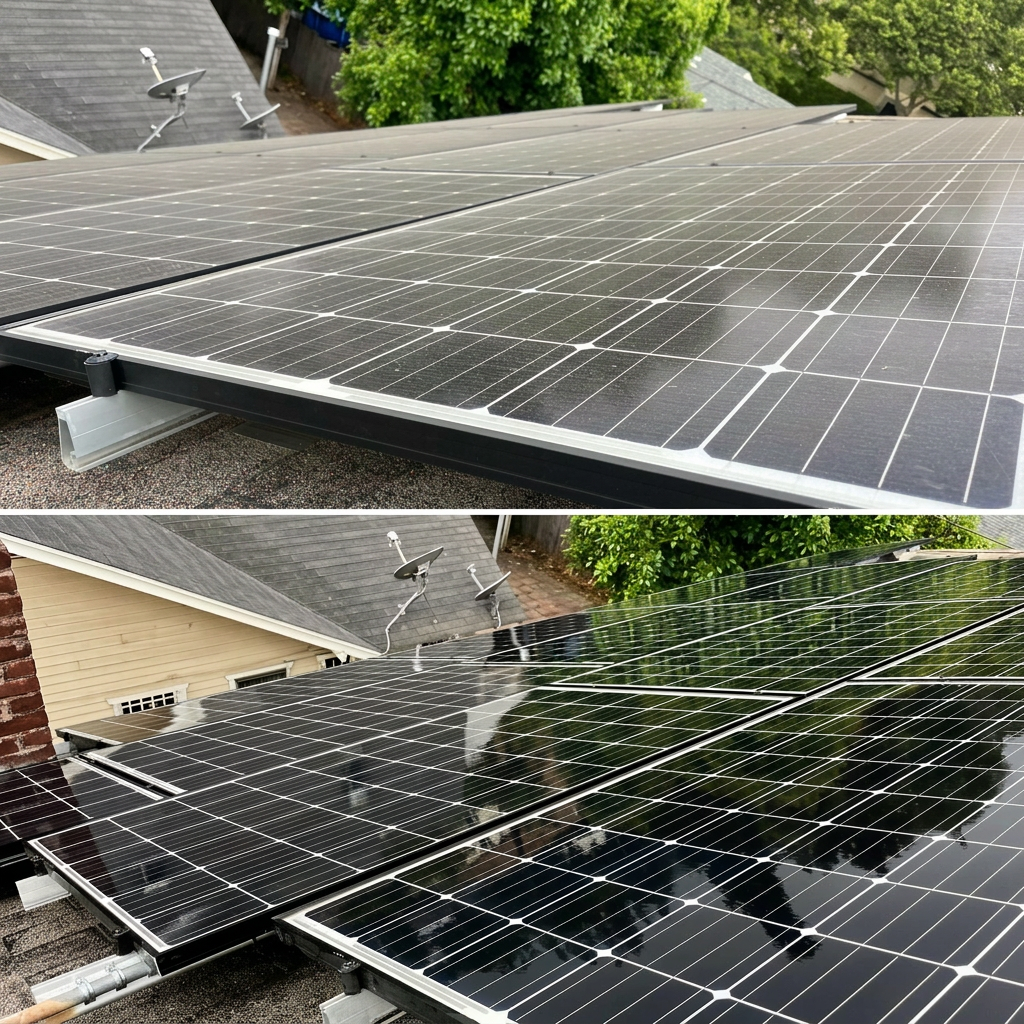
Same roof, different row. Tree pollen and bird traffic from the neighbor's oaks had baked a chalky film onto the glass. A careful soft-brush pass restored a clean, mirror-like surface — no streaks, no residue.
 BeforeAfter
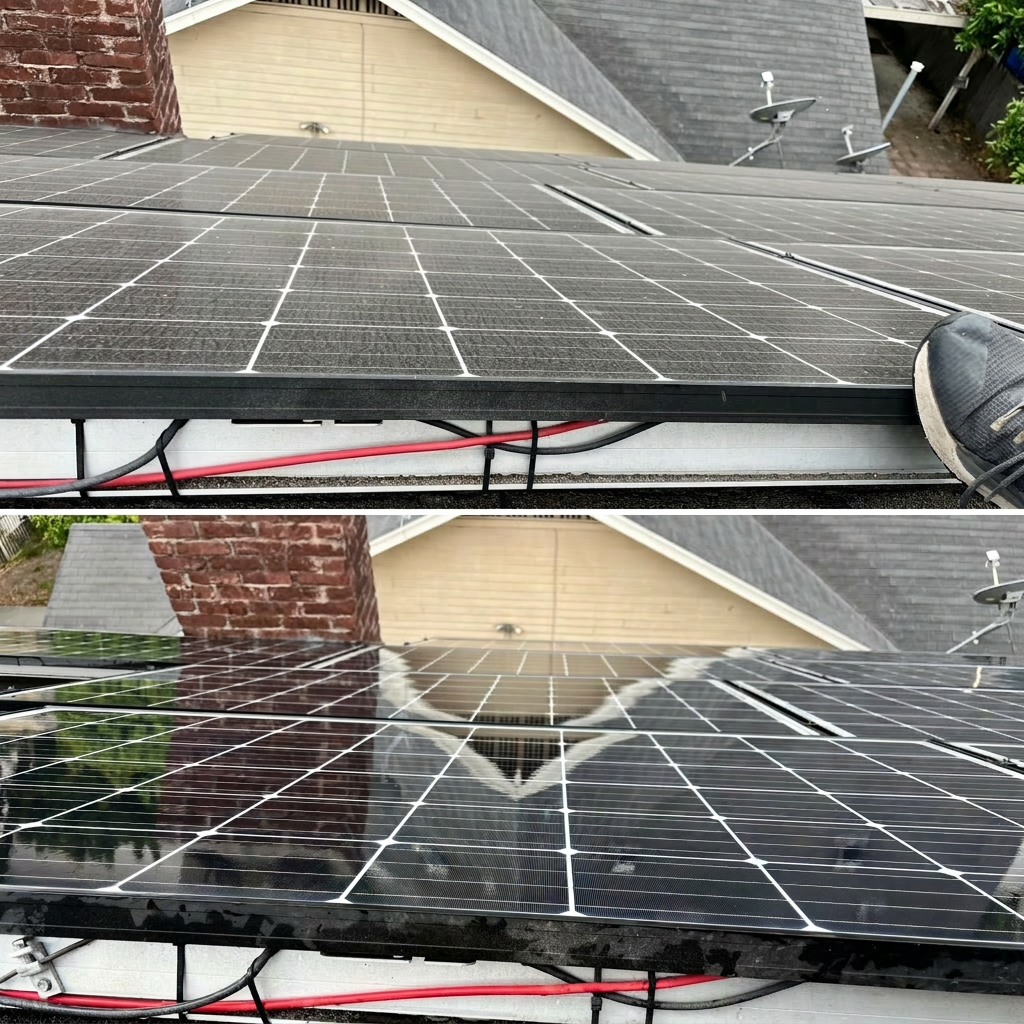
Same home again, this time the panels tucked next to the brick chimney. Brick grit and exhaust haze leave a stubborn matte coating; after cleaning, the panels reflect cleanly enough to mirror the sky.
These are screenshots from the same home's solar production app — the day before the cleaning and the day of. By 12:15 PM, the freshly cleaned array was already pulling 4.41 kW, a peak the dirty panels never reached the day before (their best was 3.9 kW at the exact same time). That's about a 13% jump in peak output from a single wash — on the same roof, same weather, same hour.
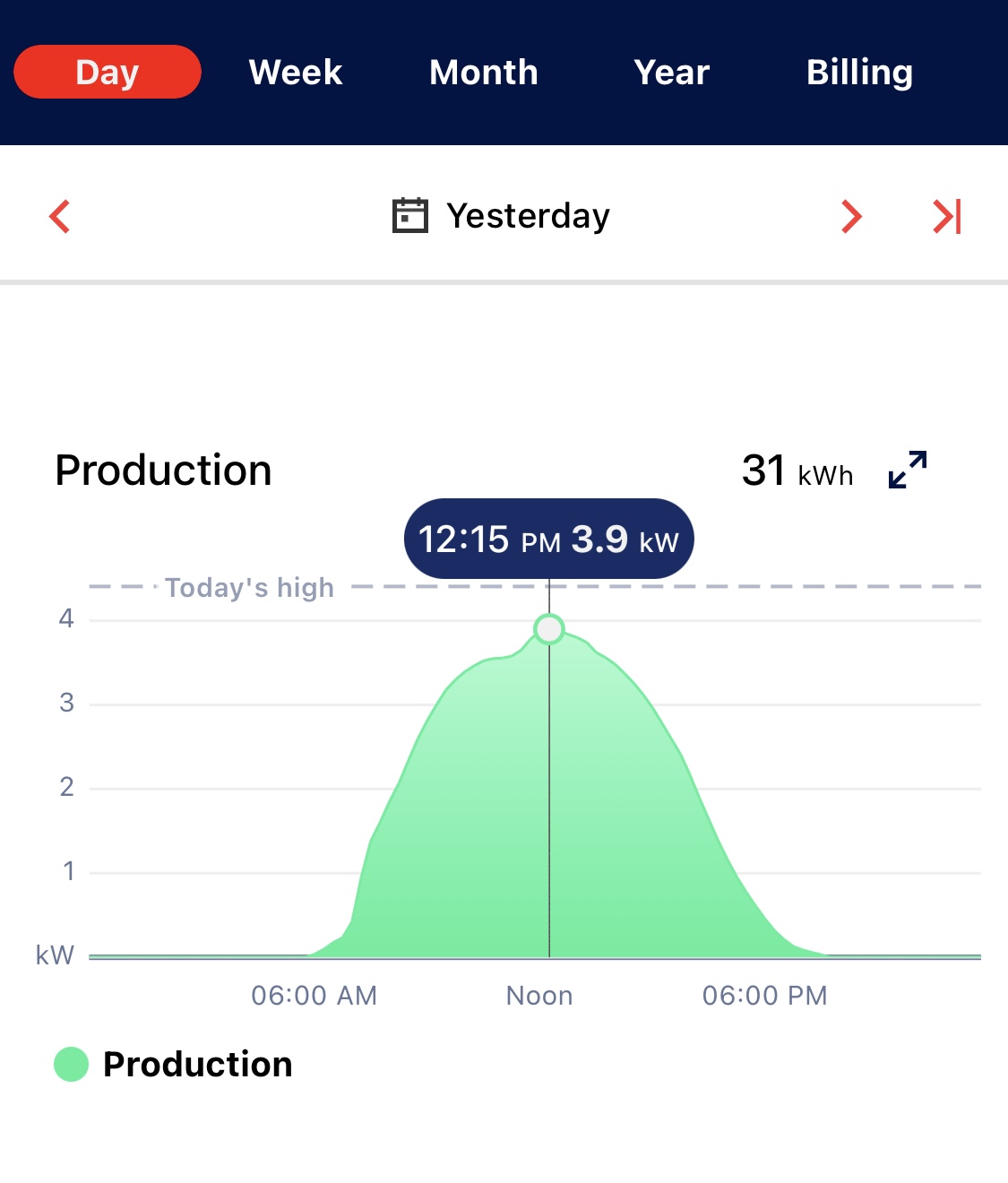
Before · Yesterday
3.9 kW peak · 31 kWh total
Dusty panels, gentle bell curve, capped well below the array's potential.
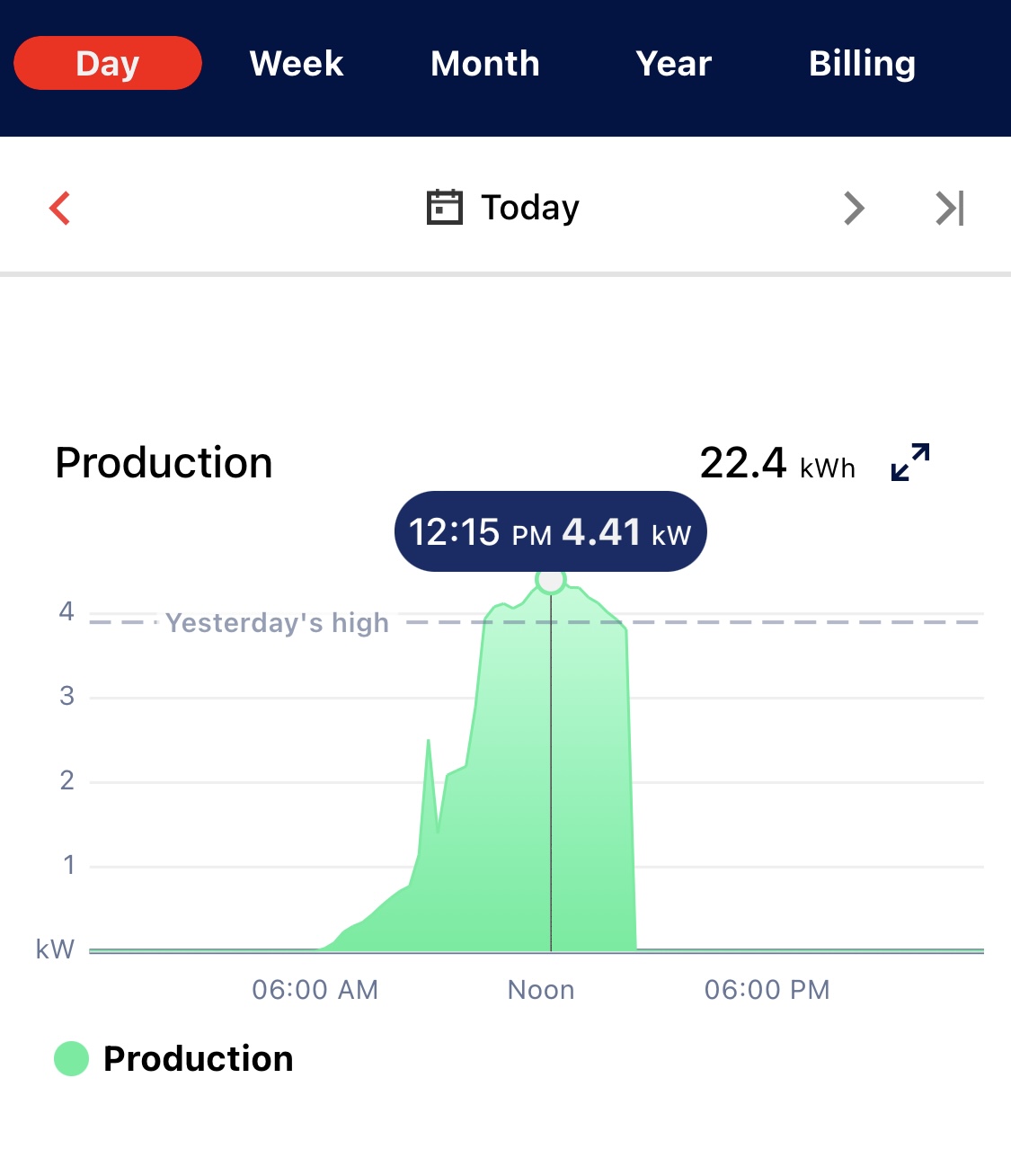
After · Today, same time
4.41 kW peak · climbing past yesterday's high
New peak punches straight through yesterday's dashed ceiling — about +13% at noon.
Anyone can post two photos and tell you cleaning helped. The honest test of a solar cleaning isn't whether the panels look shinier in a marketing shot — it's whether three specific things changed. When you're comparing your own panels before and after any cleaning (ours or anyone else's), these are the details to check.
On a dirty panel, the silvery cell grid underneath the glass looks blurry and washed out. After a real cleaning, the grid lines should snap into sharp focus — that's the glass being actually transparent again, not just rinsed.
Look at how the panel reflects the sky. Dirty panels reflect a chalky, hazy gray — clean panels reflect clouds and color the way a window would. If the reflection still looks muted after a cleaning, the surface wasn't fully restored.
Check the panel edges where water tends to pool. Mineral spotting or detergent residue shows up here first. A properly done deionized-water cleaning leaves zero spotting, even right where the water sat the longest.
The math on the home you see above is genuinely worth doing. The system produced 31 kWh on the dirty day. After cleaning, the same roof under the same sky was on pace for closer to 35 kWh — a gain of about 4 kWh per sunny day. South Pasadena residents pay roughly $0.32 to $0.55 per kWh on SCE depending on tier and time of use, so even at the low end, this single cleaning is recovering $1.28 a day during peak season. Across the 200+ sunny days between cleanings, that's $250 to $400 back — for a service that typically costs less than a single tank-and-water-heater inspection. And that's just one home, on one cleaning, with light grime. Heavily fouled arrays often jump 25% or more.
More importantly, the photos and the numbers tell the same story. Solar panels don't degrade as quickly as people think, but solar panel power quietly underperforms when the glass is dirty — and it doesn't advertise the loss. The before-and-after on this page is the same story playing out on roofs all over the 91030, mostly invisibly. A panel cleaning is just the moment your system gets to show you what it was capable of all along.
Most South Pasadena homes get a same-week appointment. Free quotes, no pressure.
Request a quote